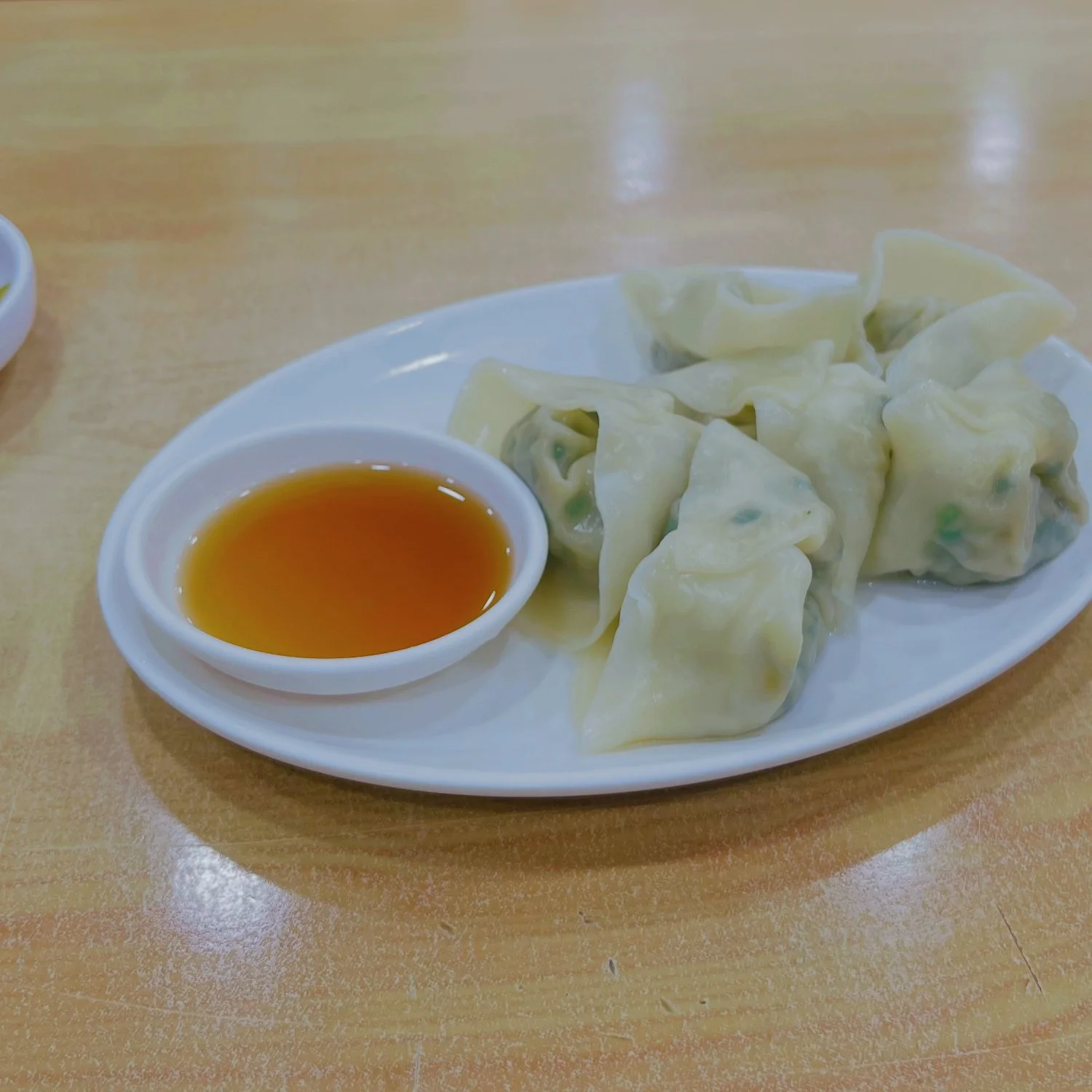
The mandu here must be good
Many years ago, I was at a small snack-bar-type place. Someone at the table next to me ordered curry—the Japanese kind, with white rice. The scent of curry wafted through the air. Suddenly I started craving curry, so I changed my mind and ordered it too.
Then the table across from me ordered curry.
Yesterday, we went to a Korean restaurant nearby. It was one of those neighborhood spots where locals come in, many with their families but also plenty on their own, for a hearty bowl of kalguksu (칼국수, knife-cut noodle soup) or sujebi (수제비, hand-torn dough soup).
The owner was a gruff haraboji (할아버지, old man or grandfather). He barely acknowledged us when we walked in. He was one of those old-school Korean restaurant owners who wear their smiles on their hearts, not their faces.
We decided to order a plate of son-mandu (손만두, Korean-style handmade dumplings) as well. They were delicious. The wrappers were thin and tender, with just enough chew, and the filling was soft and almost fluffy rather than densely packed.
The sujebi was amazing, too. The hot broth had real depth but felt refreshing at the same time. The pieces of sujebi were substantial in a good way—not too thick, with just enough bite.
The portions were big, so we decided to order another plate of mandu to go and asked them to pack up the few we had left along with it.
The owner announced toward the kitchen in a booming voice:
“One mandu to go!”
An elderly couple at the table across from us looked up.
The man called the owner over and asked for a plate of mandu to go as well.
The owner once again boomed toward the kitchen:
“One mandu to go!”
Then I heard someone a few tables away remark,
“The mandu here must be good.”