
Hawaiʻi — Aloha (Part 1)
It was my first time in Hawaii, a family affair with my parents, my brother, his wife, and their two kids. I read online that the name Hawaiʻi could be interpreted as hā for breath, wai for water, and ʻi for a higher power or higher self. It may not be the literal origin of the name, but I liked the idea—breath, water, and something greater than ourselves. The perfect combination for a break from work.
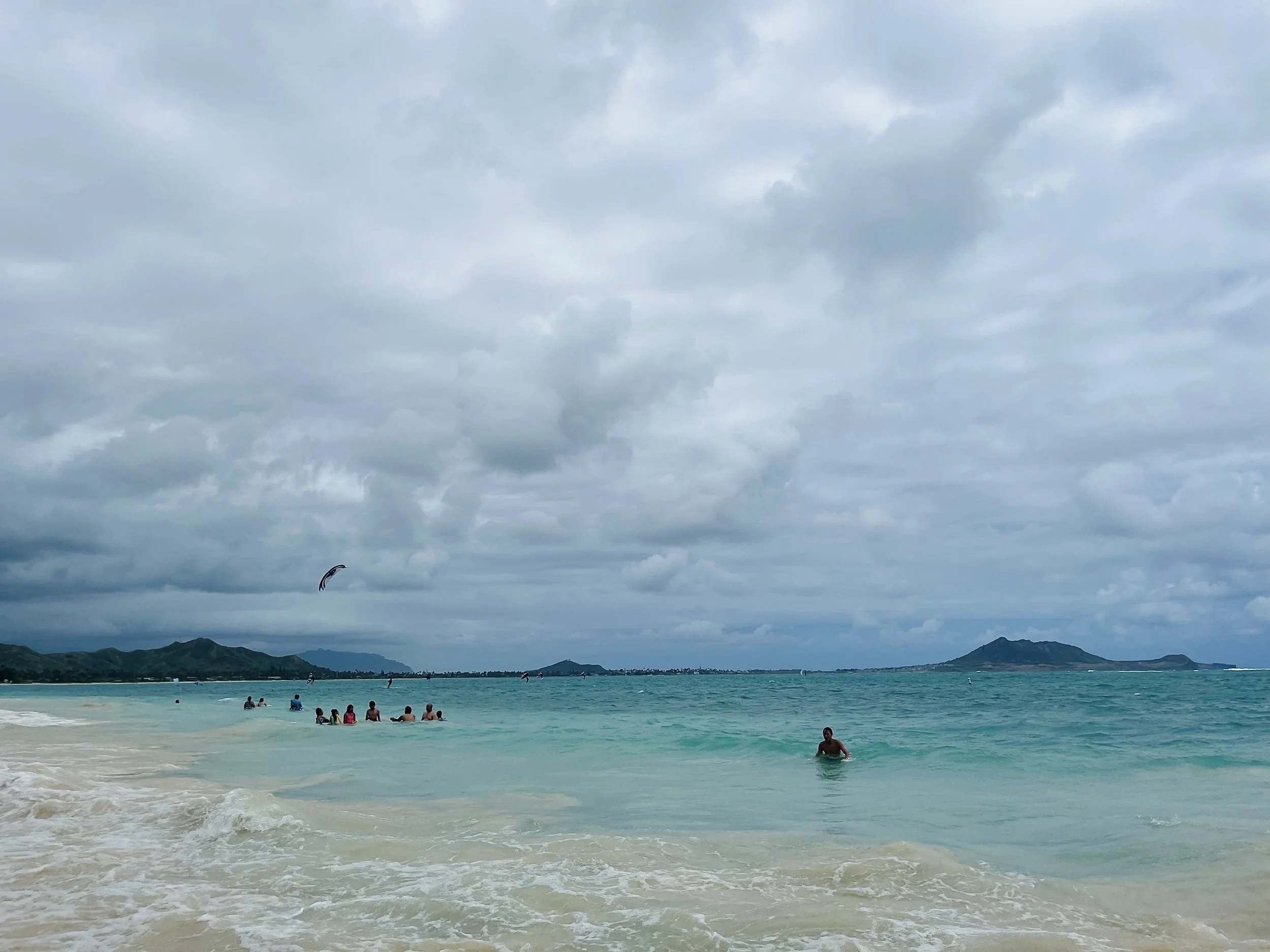
Waimea Bay Beach Park, Oʻahu, Hawaii
Over the next seven days, we jumped waves in the shallow waters of Waikiki Beach. We went beach hopping along the North Shore. We hiked, saw Christopher Nolan’s The Odyssey, and stood in line for the Honolulu editions at Stüssy. More on The Odyssey and Stüssy in parts two and three.
We also met a cousin for lunch. He lives nearby, and we hadn’t seen him in years. But family being family, we fell back into conversation almost immediately. The visit was short, but it was lovely to reconnect.
After lunch, we called a Lyft. A Tesla Model X pulled up, the one with the Falcon Wing doors. Our driver was friendly. He apologized that one of the doors was broken. A passenger had broken it. He was smiling when he said it, with a what-can-you-do attitude. He asked where we were from.
“California and Seoul.”
He told us his Korean name was Taeyoung (태영), and that his favorite Korean phrase was Ah, geu-rae? (아, 그래?) Something like, “Oh, really?” or “I see.” He was Filipino, Irish, and Native Hawaiian, and had served in the military. He had a Korean girlfriend, hence the Korean name.
As we drove, he told us about the word aloha. It’s more than hello or goodbye. It’s also love, peace, and compassion. He explained it through two Hawaiian words: alo, meaning face or presence, and hā, the breath of life. When two people face each other, they share presence and breath.
Aloha is a way of being with someone.
He also told us that, rather than saying goodbye, Hawaiians say a hui hou, meaning until we meet again. I liked how, in Hawaii, parting is the space before meeting again.
Maybe that was why his explanation felt familiar. In Korean, hello is annyeonghaseyo (안녕하세요), which asks, at least in its roots, “Are you well?” When someone leaves, you say annyeonghi gaseyo (안녕히 가세요): “Go well,” or “Take care.” If you’re close, both hello and goodbye can simply be annyeong—a wish for well-being.
Aloha and annyeong are not equivalents, of course, and two greetings are weak grounds for a grand theory of culture. Still, I hear in both a similar hope, that the person before you is well, and will remain so after you part.
During our Hawaii trip, we spotted a sea turtle in the distance, an inquisitive seal making an appearance on the beach, and a double rainbow.
Hawaii was saying aloha to us in many different ways.
I also lost my sunglasses while jumping waves in Waikiki. Not the wisest thing to do, I know. I spent the next few days looking for them, hoping they would wash up on shore.
I guess it’s a hui hou to my glasses.
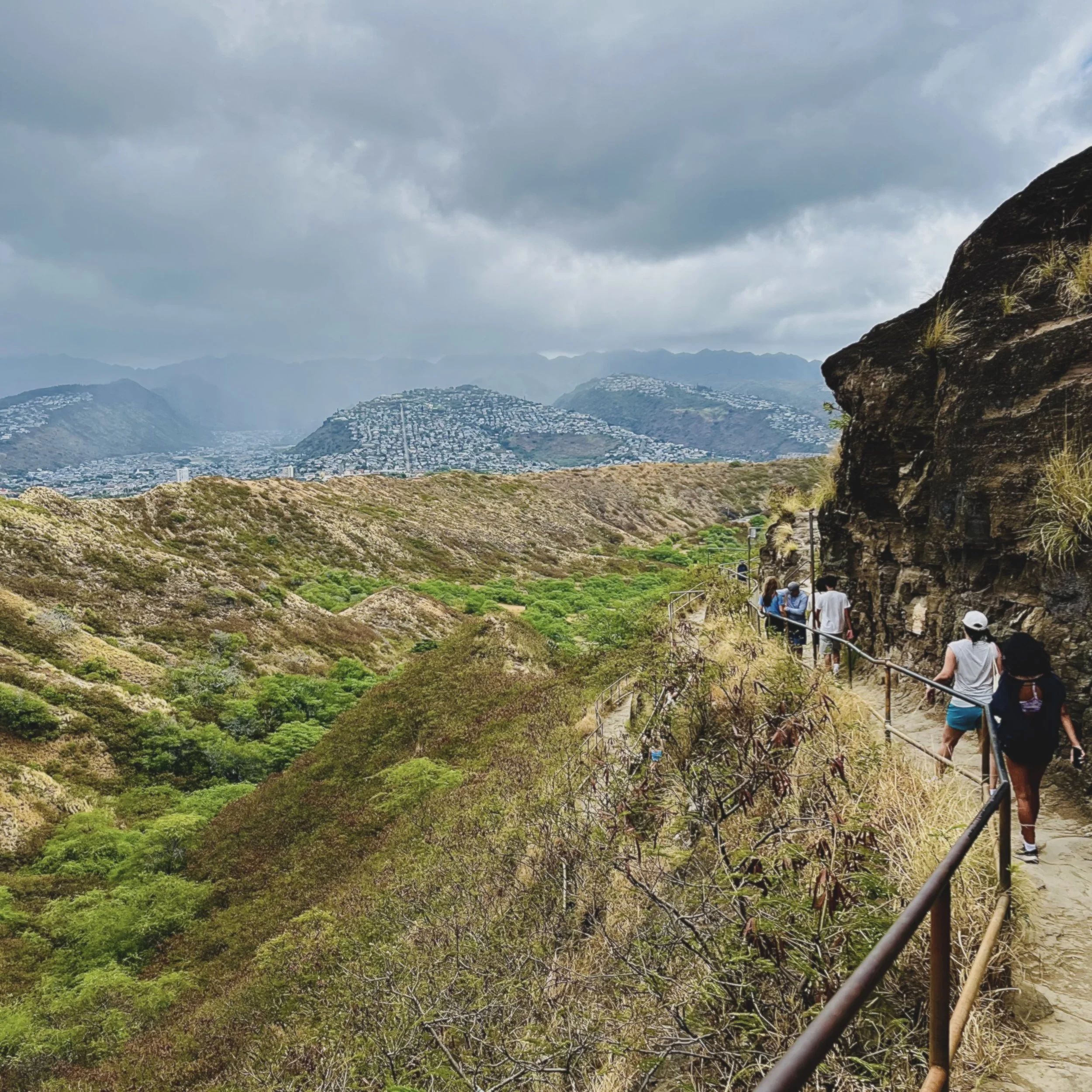
Hiking at Diamond Head Beach Park
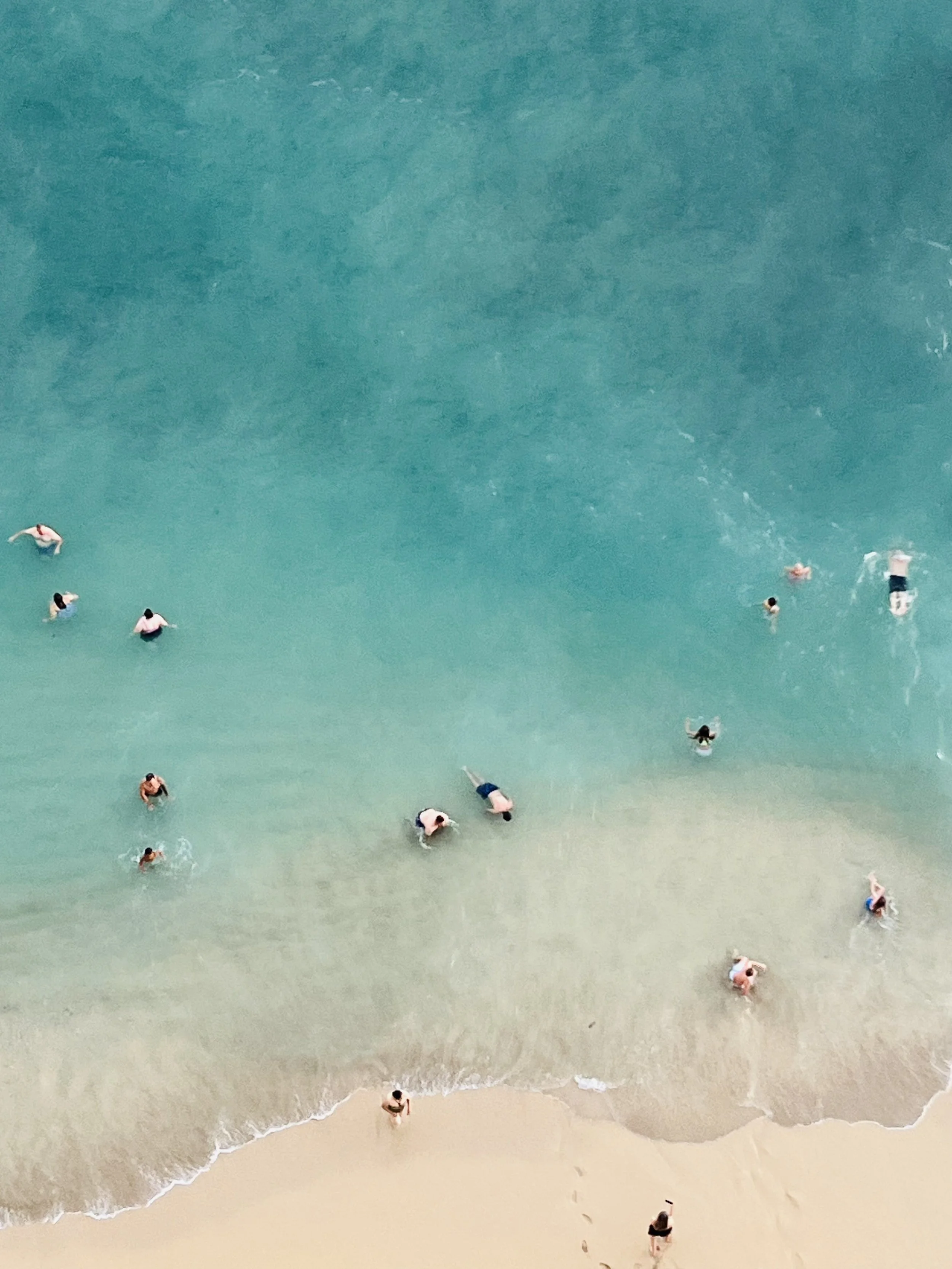
A hui hou, Waikiki!
